
The 8 Questions Zion Visitors Ask Us Most
Updated: Jul 27

After enough seasons of welcoming guests to the east side of Zion National Park, you start to hear the same questions over and over. It’s a big, busy place with a few quirks that catch even seasoned travelers off guard, so asking someone who knows the area can be a lifesaver.
Here are the eight we field most often, the conversation we'd have if you pulled up a chair and asked, "Okay, what do I actually need to know?"
The short version:
You don’t need shuttle reservations. The shuttle is free and first-come, first-served.
Aim to be at the canyon before 8 a.m. in peak season, or come in through the quieter east entrance.
Spring and fall are the sweet spots for weather and smaller crowds.
Most hikes don’t need a permit, except for Angels Landing's chains, which require a lottery permit.
The east side trades the in-canyon convenience of the west side for quiet, scenery, and easy access to Bryce.
Canyon Overlook and the Narrows are two Zion National Park hikes almost nobody regrets.
Bryce makes a great day trip, about 75 minutes from the east side.
As of June 7, 2026, oversized RVs can no longer drive on the Zion-Mt. Carmel Highway, so plan ahead if you're in a big rig.
Do I need shuttle reservations?
No. The Zion shuttle system is free, and you don’t need a ticket, permit, or reservation to ride it. You simply pay the park entrance fee ($35 per vehicle, good for seven days), then hop on.
Here's how the Zion shuttle system actually works: from roughly March through late November, private cars aren’t allowed on the Zion Canyon Scenic Drive past Canyon Junction. The free shuttle is the only way in, aside from walking or biking, and it runs every five to 10 minutes from early morning into the evening.
Besides a short holiday run around the end of December, the shuttle takes a break, and you can drive the canyon road yourself. Exact dates shift year to year, so it's worth a quick look at the park's website before your trip.
How early should I arrive?
In peak season, aim to be parked at the Zion Canyon Visitor Center before 8 a.m. The lots inside the park typically fill between 8 and 9 a.m., and once they do, you'll be parking in Springdale and riding the town shuttle in. An early start also means cooler temperatures and a short shuttle line.
The east side gives you a quieter way in. The east entrance sees a fraction of the south entrance's traffic, and it's about a 20-minute drive from the resort, so an early start feels less like a race.
Either way, the rule of thumb holds: the earlier you go, the more of Zion you get and the fewer people you share it with.
When is the best time to visit Zion National Park?
The best time to visit Zion National Park is spring and fall, roughly April to May and September to October. You get comfortable hiking temperatures, the canyon at its greenest or most golden, and noticeably smaller crowds than the summer peak. If we had to pick one window to send a friend, it would be late September into early October.
Summer is beautiful but hot, with afternoon highs above 100 degrees, and July and August bring monsoon storms that risk triggering flash floods. That matters most for the Narrows, which closes if there is any possibility of flooding. Winter is the quiet secret: snow dusts the red rock, the crowds thin out, and you get more solitude.
Whenever you come, weekdays beat weekends, and early mornings beat midday. That's true in every season.
Should I stay on the east side or the west side?
It depends on the trip you want. The west side, around Springdale, puts you closest to the famous in-canyon hikes, but it's busier, parking fills early, and you'll rely on the Zion shuttle system to get around.
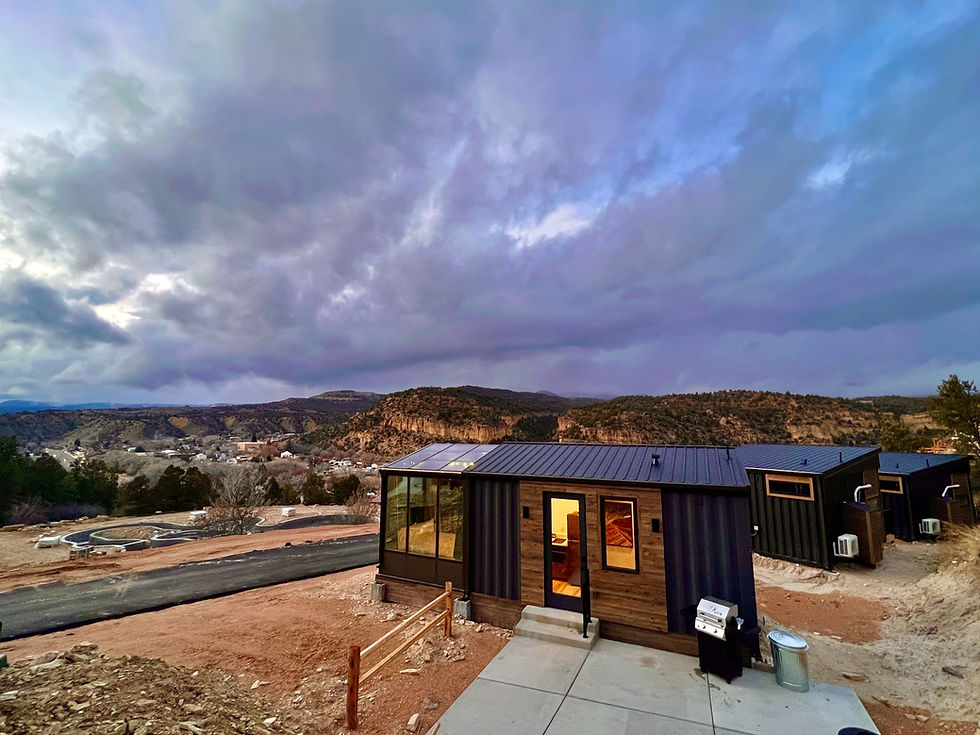
We're biased, but here's our case for the Zion east side. You wake up to red rock and open sky, rather than a crowded main street. Then, the drive into the park along the Zion-Mt. Carmel Highway is a destination in itself, with the historic tunnel, Checkerboard Mesa, and bighorn sheep along the way.
And you're already pointed toward Bryce Canyon and the North Rim of the Grand Canyon, which makes a multi-park road trip simple.

Which Zion National Park hikes are actually worth it?
The two we recommend to almost everyone are the Canyon Overlook Trail and the Narrows. Most Zion National Park hikes worth your time fall into one of two camps: short trails with an outsized payoff, or longer adventures you plan your day around.
Canyon Overlook is our backyard favorite, right here on the east side. It's about a mile round trip with a sweeping view down into the main canyon. You don’t need to take the shuttle, and it's an easy stop on your way in or out. The Narrows is the iconic wade up the Virgin River through towering walls. The bottom-up route doesn’t need a permit, only a shuttle ride to the Temple of Sinawava and a willingness to get wet.
Here are a few others, ranked by how often guests come back raving:
Emerald Pools: Family-friendly, shaded, with waterfalls; easy to moderate, depending on how high you climb.
Angels Landing: Thrilling and exposed, with a permit required for the final chains. Scout Lookout is the no-permit alternative.
Pa'rus Trail: Paved, flat, and open to bikes and strollers for a lovely sunset stroll.
Observation Point via the East Mesa Trail: A higher viewpoint than Angels Landing, with far less climbing. It’s a local secret worth the drive.
What hikes require permits in Zion?
The large majority of Zion's day hikes, including Canyon Overlook, Emerald Pools, the bottom-up Narrows, and Observation Point by way of the East Mesa Trail, don’t require a permit at all. You show up and go. Only a small handful of trails and routes require one.
The big exception, and the permit nearly everyone asks about, is Angels Landing. The final chains section requires a permit awarded through a lottery on Recreation.gov. You can still hike all the way to Scout Lookout, which has its own big views.
Beyond that, permits are mostly for canyoneering and backcountry adventures. The top-down Narrows through-hike, the Subway, and overnight backpacking trips all require advance permits.

Is Bryce worth a day trip?
Yes! Bryce Canyon is about 75 minutes away by car, roughly 75 miles up US-89, and the landscape changes drastically from Zion’s. Where Zion has you looking up at sheer walls, Bryce has you looking down into amphitheaters full of orange hoodoos. Seeing both in one trip is the whole point of basing yourself out here.
The drive from the Zion east side is shorter and simpler than from Springdale, because you skip the canyon and the tunnel entirely. Leave early, catch the morning light on the hoodoos from Sunrise or Inspiration Point, walk the Queen's Garden and Navajo Loop combo if you’re up to it, and you'll be back for dinner.
One money tip: if you're visiting Zion, Bryce, and maybe the North Rim, the America the Beautiful pass ($80 for the year) pays for itself fast instead of a per-park fee.
Can I drive my RV to Zion's east entrance?
It depends on your rig. As of June 7, 2026, vehicles with these measurements can no longer drive on the Zion-Mt. Carmel Highway between the east entrance and Canyon Junction:
Vehicles longer than 35 ft. 9 feet in.
Vehicles wider than 7 ft. 10 in.
Vehicles taller than 11 ft. 4 in.
Vehicles heavier than 50,000 lbs.
Combined vehicles, such as a truck and trailer, can't exceed 50 ft. overall or 26 ft. from the hitch to the rear axle. The old tunnel-escort permit is gone, so oversized vehicles get turned around at the gate.
Most guests in a car, van, SUV, or right-sized RV won't notice; you'll drive the highway and tunnel as always. If you have a big motorhome or a large trailer, the move is simple: park the rig with us and take a smaller vehicle in for your canyon day. Or budget the extra hour and a half to two hours for the south-entrance bypass.
Make East Zion Resort your home base
Most of these questions point to the same easy answer: the less time you spend fighting traffic and crowds, the more of Zion you actually get to enjoy. That's the whole idea behind staying on the Zion east side with us.
From East Zion Resort, you're about 20 minutes from the quiet east entrance, roughly 75 minutes from Bryce Canyon, and right next to the slot canyons and the Canyon Overlook Trail. Best of all, you come home at the end of a long trail day to comfort and quiet instead of a packed parking lot.
If that's the Zion trip you're picturing, we'd love to host you at East Zion Resort. Check availability and book your stay, and bring your questions along. We'll have the trail recommendations ready, the answers you need, and the firepit going when you arrive.


I totally get the early arrival tip—it changes the game. This reminds me of how crucial it is to plan ahead, kinda like using a tool to find the best breeding combos in games. Check it out for some insights on that topic palworld.
When talking about any game, I feel that looking only at the final result is not enough. DM First Register Understanding the gameplay, rules, different situations, and the decisions players make gives a much better overall picture.
这篇攻略太实在了,早上8点前到真的能少排好久的队,东入口确实比南边安静太多。我打算下次去的时候带上我的fullscreen yellow display,正好测试一下红色岩石在黄屏下的视觉冲击力,绝对震撼。
Snow Rider 3D is an exciting blend of eye-catching winter scenery and high-speed gameplay, creating an arena where composure and quick reflexes must go hand in hand.
That's Not My Neighbor turns an ordinary doorman job into a tense test of observation, where checking identities, spotting subtle mistakes, and deciding who belongs can make every visitor feel like a new challenge.